How Overseas Buyers Use Their Own Currency to Shop from China

How Overseas Buyers Use Their Own Currency to Shop from China is not just a payment question. It is a full workflow question. Many overseas buyers can find what they want on Taobao, 1688, Weidian, JD, or Pinduoduo, but they still get blocked by payment, seller communication, warehouse receipt, product checking, freight calculation, and final international shipping. CNCartGo publicly describes a workflow built around those exact steps: buyers can paste product links, pay through supported payment methods, let CNCartGo handle procurement in China, receive warehouse inspection photos, and then choose shipping after the parcel is weighed.
That is why "using your own currency" should not be understood as a one-click trick. It usually means this: the buyer pays the service platform in a supported foreign-currency flow, and the platform then completes the China-side purchasing process in RMB. CNCartGo's Buyer's Guide says proxy-purchase orders support multi-currency payments in foreign currencies and RMB, while its payment policy says the platform currently supports PayPal, Stripe, and wallet balance payment.
Why do overseas buyers still struggle to shop from China directly?
Direct platform payment is only one part of the problem
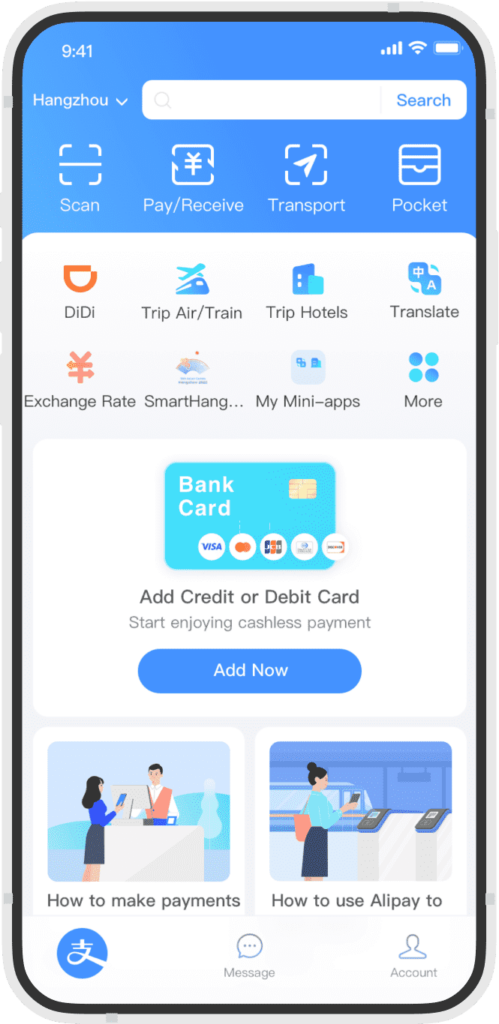
Some overseas users can link international bank cards to Alipay. Alipay+ says overseas users can bind international bank cards and use them for daily purchases in mainland China, and Shanghai's official English-language guidance says foreign-issued cards outside mainland China can be linked to Alipay. But both sources also make clear that this is mainly about payment convenience, not the whole cross-border buying chain. Alipay+ specifically says international bank cards do not support every function, including person-to-person transfers and some other financial services.
That difference matters. Even when payment is technically possible, many overseas buyers still face the harder parts afterward: the seller may only ship within China, product details may need confirmation in Chinese, several orders may need to be combined, and the real international shipping cost may not be clear until the goods reach a warehouse and are weighed. CNCartGo's published workflow is built around those later stages, which is why a full-service process is often more useful than a direct-payment workaround.
Overseas buyers usually need a process, not just a card
A buyer in France, the UK, the US, or Australia may be able to pay for one simple order in some circumstances. But if that buyer wants to combine items from several sellers, check whether the right color arrived, or compare shipping routes after actual package weight is known, payment alone is not enough. CNCartGo's guide says its procurement team contacts sellers on the buyer's behalf, the warehouse receives and inspects goods, actual product photos are taken, and shipping is selected later in the parcel stage.
How does using your own currency work in a practical China-shopping workflow?
Step 1: The buyer finds the product
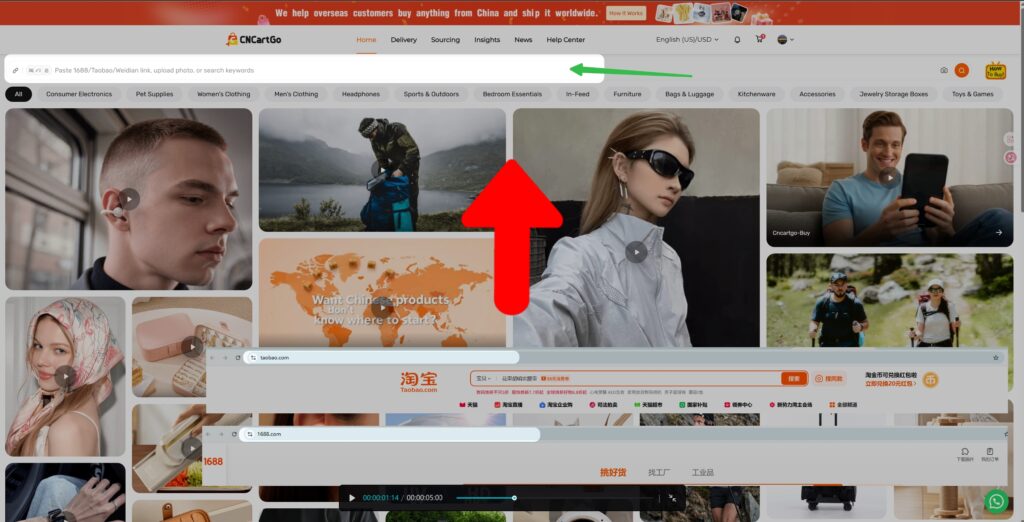
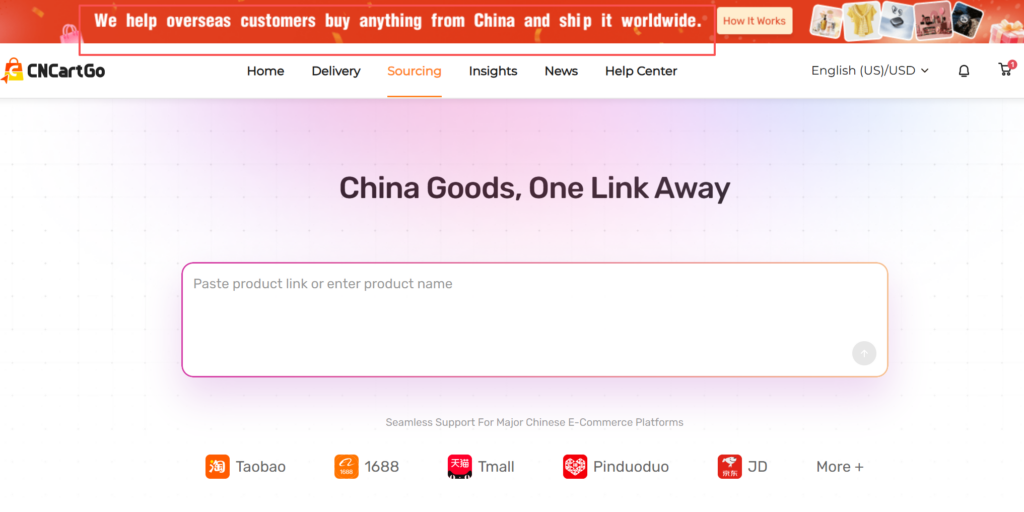
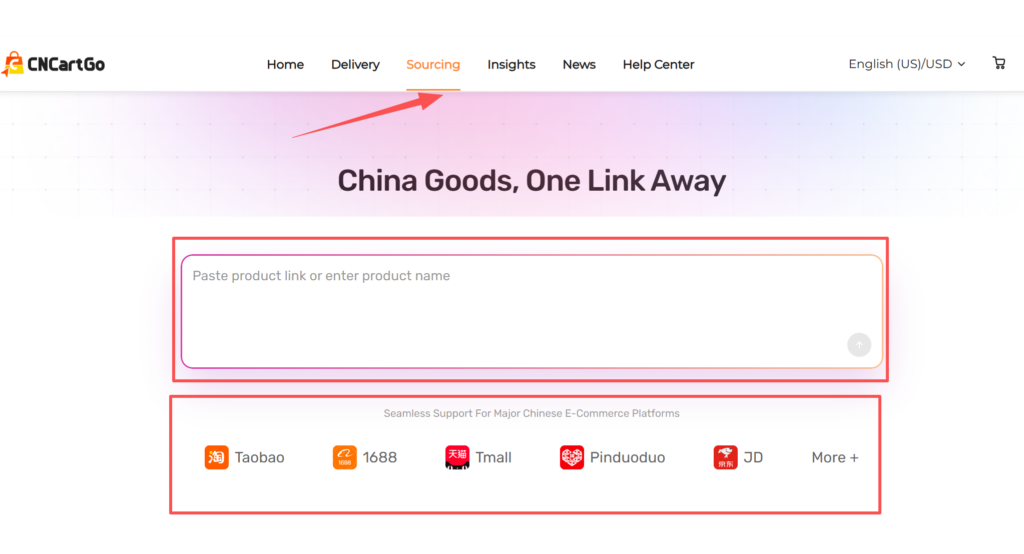
CNCartGo's homepage says users can paste 1688, Taobao, and Weidian links, upload a photo, or search keywords. Its Buyer's Guide says the Home-page search supports Taobao, 1688, and Weidian, and that other platforms should go through Sourcing (DIY Orders). That creates a practical entry point for overseas buyers who already know the item they want but do not want to handle the China-side checkout alone.
Step 2: The buyer pays CNCartGo in a supported method
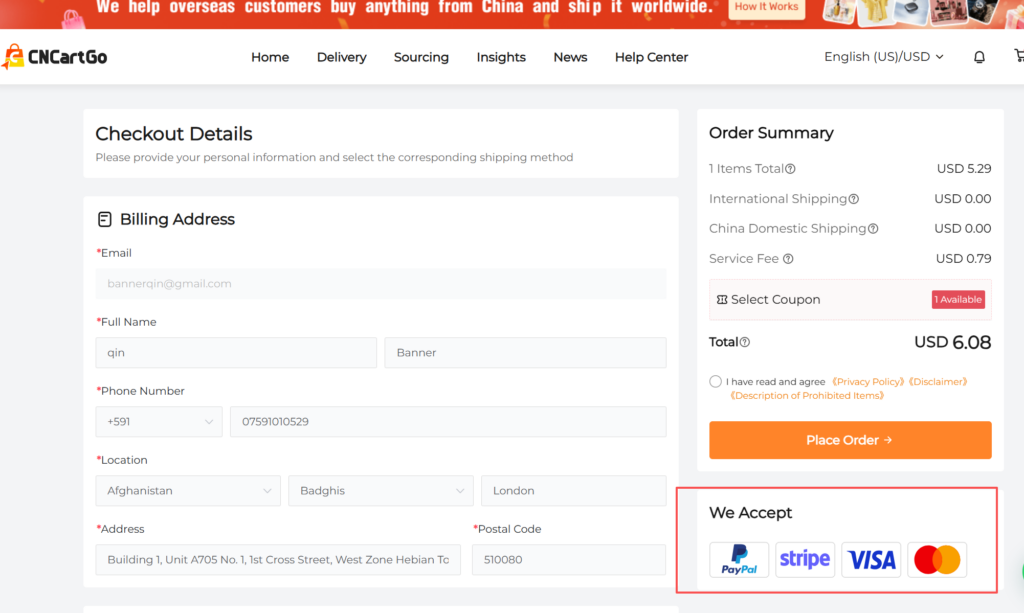
This is where "using your own currency" becomes practical. CNCartGo's Buyer's Guide says buyers submit the order, choose a payment method, and pay for the product price plus shipping to mainland China. The same guide says proxy-purchase orders support multi-currency payments in foreign currencies and RMB, while the payment policy says the platform supports PayPal, Stripe, and wallet balance.
In other words, the buyer does not need to personally solve the RMB-side purchase. The buyer pays the platform through a supported international payment setup, and the platform then takes over the local execution step inside China. That is the real operational value of using your own currency through a buying-agent model. This conclusion is directly supported by CNCartGo's published payment and procurement workflow.
Step 3: CNCartGo completes the RMB-side procurement
CNCartGo's Buyer's Guide states that its procurement team contacts the seller on the buyer's behalf to place the order. It also says buyers can use the Work Order System or WhatsApp during procurement if more details or requests are needed. This means the buyer is no longer responsible for acting like a local domestic shopper in China.
Why is this better than trying to force direct payment on Taobao?
A buying agent covers the warehouse step
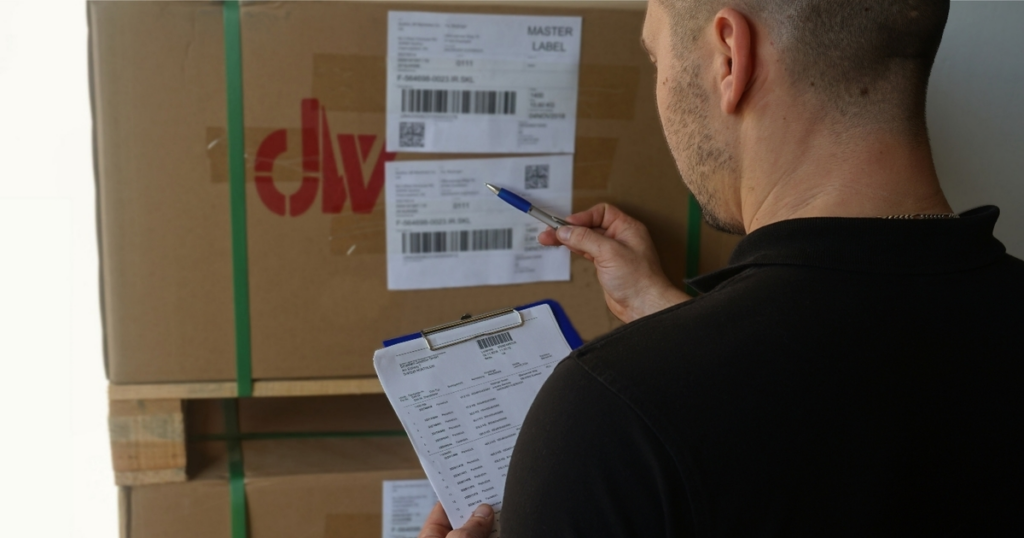
One of the biggest differences is warehousing. CNCartGo says its designated warehouse receives and inspects goods, weighs and stores them, and takes actual product photos for review. It also says any issues found are reported to the buyer with assistance for resolution, and that the warehouse offers 30 days of free storage.
That is a major upgrade over a payment-only method. A direct payment workaround may get the order placed, but it does not tell the buyer whether the seller sent the correct product, whether the packaging is damaged, or whether the item still makes sense to ship internationally. The warehouse step creates a control point before export.
A buying agent makes freight more accurate
CNCartGo's Buyer's Guide says that for shopping-service orders, international shipping costs are not displayed before initial payment and that the final price is provided based on actual weight and shipping method before shipment. Its shipping policy also says shipping fees are calculated based on destination, package weight, and shipping method.
That is important because many overseas buyers underestimate how much international freight depends on the final parcel, not just the product page. A lightweight-looking order may become bulky after packaging. A combined parcel may reduce repeated shipping minimums. A route may be available for one product type but not another. These are freight questions, not payment questions.
What real overseas scenarios does this help with most?
Scenario 1: An overseas student wants products from China but cannot easily complete the process
Imagine a student in the UK who wants familiar snacks, dorm supplies, stationery, or seasonal clothing from Taobao and Weidian. The student may be able to browse products, but the whole process becomes difficult when payment, seller communication, domestic receipt, and international forwarding are added together. With CNCartGo's published workflow, that student can submit the product link, pay in a supported method, wait for warehouse inspection, confirm the goods, and then choose shipping after the parcel is ready.
Scenario 2: A buyer wants products from several Chinese platforms in one workflow
This is another common use case. A buyer may want one item from Taobao, one from Weidian, and another from a platform not covered by standard search. CNCartGo's guide says the Home-page search supports Taobao, 1688, and Weidian, while other platforms should use Sourcing. That means the buyer can still route all of those purchases into one managed system instead of solving three or four separate checkout problems.
Scenario 3: A family in China wants to send goods to someone overseas
Sometimes the issue is not product discovery at all. The goods may already be in China. CNCartGo's Buyer's Guide includes a Delivery Order flow where the user provides the shipping carrier, tracking number, product name or link, category, quantity, price, and product attributes, then waits for warehouse inspection and receipt before selecting shipping and getting a quote.
That fits a very real scenario: family members, friends, or suppliers in China can send the goods to the warehouse first, and the overseas buyer then handles the international leg through one platform. In this case, "using your own currency" still matters because the buyer is paying for the service and outbound shipping in a supported cross-border flow rather than trying to arrange everything inside China personally.
Scenario 4: A small business has already sourced stock in China but still needs export shipping
CNCartGo's Delivery Order workflow also helps when the products are already purchased but not yet exported. A small business might already have a supplier or a local contact in China, but still need warehouse receipt, inspection, freight calculation, and route selection. CNCartGo's published process supports exactly that kind of handoff.
How do multiple orders help buyers save money?
Consolidation is one of the biggest practical benefits
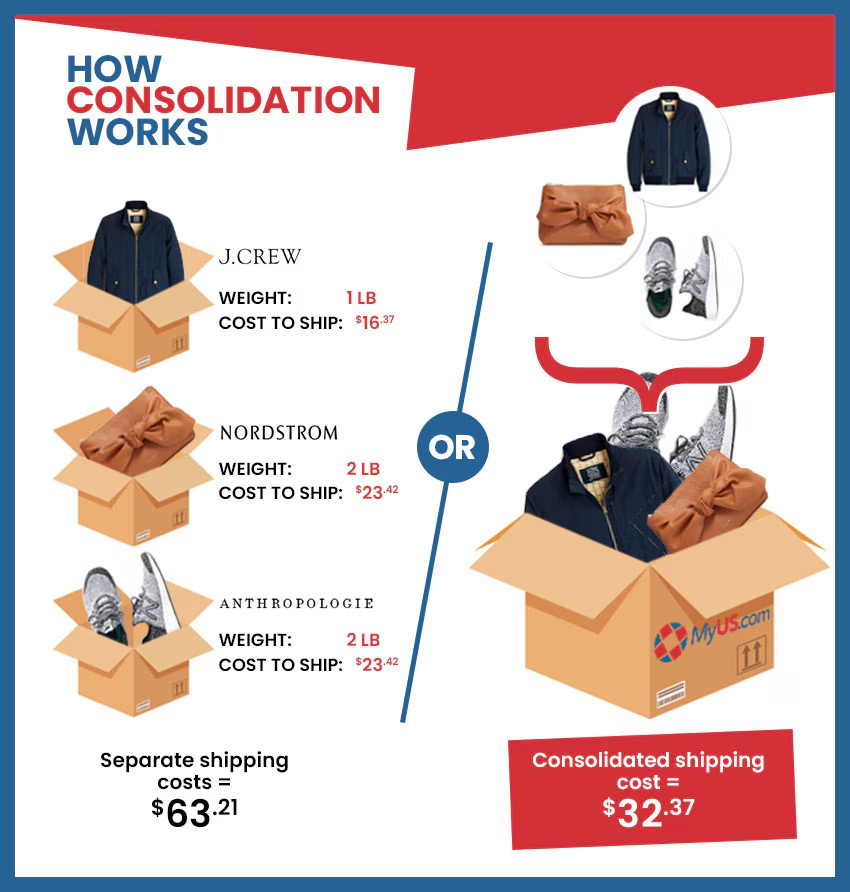
CNCartGo says that when multiple items arrive at the warehouse, buyers can review the actual arrivals and then move forward with parcel handling. The guide also says consolidating multiple items for combined overseas shipping can save international shipping costs.
This matters because overseas buyers are often not buying just one product. They may be testing several items, buying from several sellers, or mixing personal purchases with gifts or resale stock. If each order leaves China separately, the buyer may face repeated minimum shipping costs. Consolidation can turn those scattered purchases into one better-managed parcel.
What should buyers still check before placing the order?
Return rules still matter
CNCartGo's Return Refund Policy says eligible orders can use a 5-day return or exchange service, subject to conditions such as seller support, resalable condition, and limited stock time. It also lists non-eligible categories such as customized products, second-hand items, and certain personal-use goods.
So even though a buying-agent workflow is more complete than a payment workaround, it does not remove all item restrictions. Buyers should still check the product category, seller return support, and timing before deciding to export the goods.
Shipping routes still depend on product type and destination
CNCartGo's shipping policy says it ships to most countries and regions, but some areas may be unavailable because of carrier or customs restrictions. It also says customs duties and import taxes are not included in shipping fees and remain the recipient's responsibility where applicable. The Buyer's Guide further notes that some items are subject to shipping restrictions and may not be available on all logistics routes.
That means the strongest workflow is not simply "pay and hope." It is "pay, procure, inspect, weigh, choose the route, and then ship." That is where a managed platform has an advantage. This is an inference drawn from CNCartGo's documented process.
Conclusion
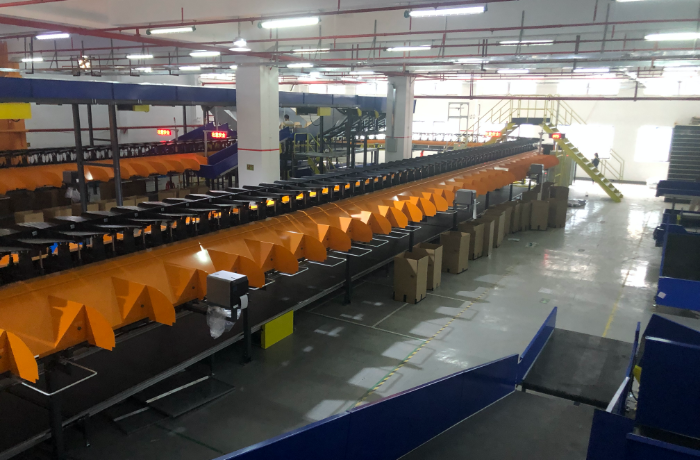
How Overseas Buyers Use Their Own Currency to Shop from China is really about replacing a broken cross-border process with a more complete one. Some overseas users can link international bank cards to Alipay for certain daily purchases in China, but that does not automatically solve seller communication, warehouse receipt, parcel consolidation, or export shipping. CNCartGo's published workflow does address those later stages: multi-currency payment support, PayPal and Stripe, RMB-side procurement, warehouse inspection, actual product photos, 30-day storage, parcel consolidation, post-weighing freight calculation, and international route selection.
For many overseas buyers, that is the real answer. They are not only looking for a way to pay. They are looking for a way to complete the whole China shopping journey in a cleaner, safer, and more manageable way. A full-service buying workflow is usually what makes that possible.
Read More:
Why a Full-Service Buying Agent Is Better Than Just a Payment Workaround
How Small Businesses Source and Ship Products from China Without a Local Team
Can't Pay on Taobao Directly? Here's What Overseas Buyers Do Instead