Taobao, Pinduoduo, JD, and Weidian: How to Buy Across Platforms More Easily

Taobao, Pinduoduo, JD, and Weidian: How to Buy Across Platforms More Easily is a practical question for overseas buyers who already know what they want, but cannot complete the full China-to-overseas shopping process on their own. The problem is rarely just product discovery. It is usually payment, seller communication, domestic receiving, quality checks, package consolidation, and international shipping. CNCartGo publicly positions itself as a platform where users can paste 1688, Taobao, and Weidian links, upload photos, or search keywords, then buy from China and ship worldwide. Its Help Center also lays out a full buyer workflow covering payment, proxy purchasing, warehouse inspection, storage, combined shipping, and international delivery.
For many overseas users, the real advantage is not only that they can pay CNCartGo in supported methods such as PayPal, Stripe, and wallet balance. It is that CNCartGo can handle the RMB-side procurement process, receive goods in China, inspect them, take actual product photos, calculate shipping after weighing, and then dispatch the parcel through available logistics routes. That is why a cross-platform buying workflow is often easier than trying to solve each marketplace separately.
Why is buying across Chinese platforms hard for overseas users?
Each platform is different, but the buyer's pain points are often the same
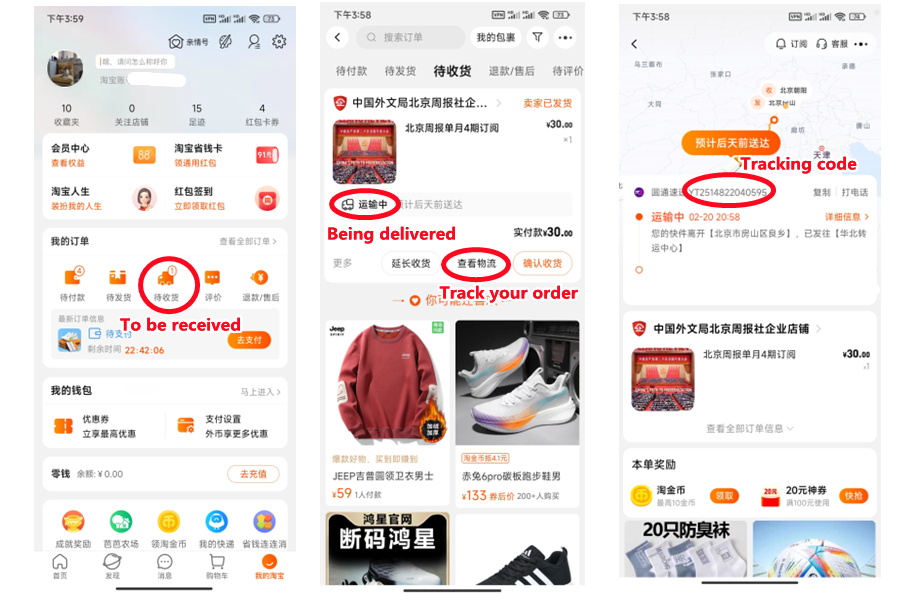
Taobao, JD, Pinduoduo, and Weidian are not identical marketplaces. JD presents itself as a large retail and supply-chain-based technology and services enterprise, while Weidian describes itself as a social-commerce platform built around merchant tools and social relationships. PDD Holdings, which owns the Pinduoduo business, describes itself as a multinational commerce group with sourcing, logistics, and fulfillment capabilities supporting its businesses. In short, these platforms are different ecosystems, and that is exactly why overseas buying becomes fragmented.
But for the overseas buyer, the pain points repeat across all of them:
- direct payment may not be convenient
- customer service may be in Chinese
- sellers may not support direct overseas delivery
- product details may need confirmation before export
- shipping costs are often unclear until the goods are packed
- buying from several sellers can create repeated freight costs
That is why many buyers do not really need "four different shopping skills." They need one repeatable workflow.
Cross-platform shopping gets harder when orders come from different sellers
Buying one item from one seller is easy to imagine. Buying across platforms is not.
A buyer may want:
- cosmetics from Weidian
- household items from Taobao
- better-priced basics from Pinduoduo
- electronics or branded daily-use items from JD
The order logic quickly becomes messy. Different sellers, different delivery speeds, different packaging, and different domestic shipping arrangements all create friction. CNCartGo's warehouse-based process is useful here because the platform can receive goods first, inspect them, store them, and allow the buyer to combine shipments after the items actually arrive.
What do overseas buyers do instead?
They use one platform to manage multiple China-side steps
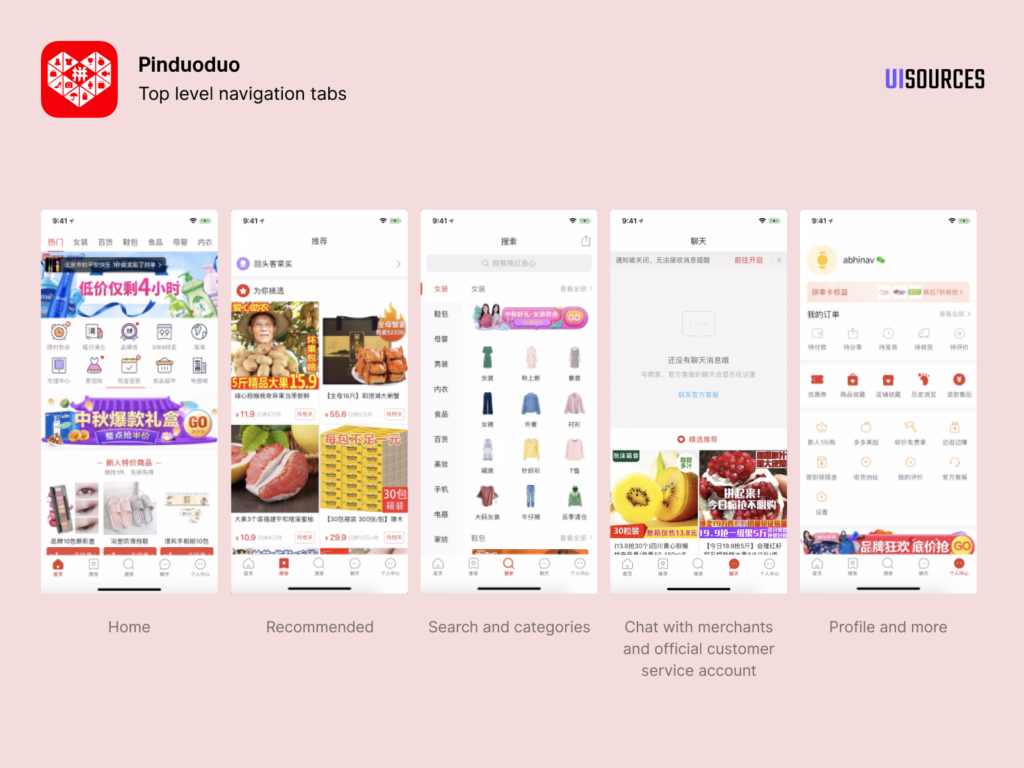
Instead of trying to check out directly on each platform, many overseas buyers use a shopping-agent model. CNCartGo's public buyer guide says there are two main ways to purchase: directly from the Shop page, or through the Buy workflow by copying and pasting a product link. The guide explicitly mentions support for finding and retrieving information for most Taobao, Tmall, and JD.com products. Meanwhile, CNCartGo's homepage says users can paste 1688, Taobao, and Weidian links, upload photos, or search keywords.
This matters because it gives the buyer a much easier structure:
- find the item on the original platform
- submit the link or use search
- pay CNCartGo in a supported method
- let CNCartGo buy in RMB
- wait for warehouse inspection
- confirm the goods
- combine items if needed
- pay final shipping after weight is confirmed
- choose the delivery route and ship out
That is a much more complete answer than "try another card."
How does the CNCartGo workflow solve cross-platform buying?
Step 1: Submit the product link or search the item
CNCartGo's Buyer's Guide says users can either buy directly on the Shop page or purchase through the Buy page by copying and pasting a product link. The guide specifically references Taobao, Tmall, and JD.com product links. On the homepage, CNCartGo also says users can paste 1688, Taobao, and Weidian links.
This creates a practical entry point for cross-platform orders. The buyer does not have to make each platform behave like an international storefront. The buyer mainly needs the correct product link, the right SKU details, and clear notes.
Step 2: Pay for the product first, not necessarily the final overseas freight
CNCartGo's guide says the buyer submits the order, selects a payment method, and pays the product price plus shipping to mainland China. It also notes that proxy-purchase orders show an estimated international fee before payment, but the final shipping price is provided later based on actual weight and shipping method before dispatch. The guide also states that proxy-purchase orders support multi-currency payments and payment methods including PayPal, Stripe, and account balance. The separate Payment Policy confirms support for PayPal, Stripe, and wallet balance.
This is one of the most important parts of the process. It separates:
- buying the goods
- shipping the goods internationally
For cross-platform buying, that separation is useful because the final shipping bill becomes much more accurate only after all the items have actually reached the warehouse.
Step 3: CNCartGo buys in RMB on the buyer's behalf
The Buyer's Guide states that CNCartGo's procurement team contacts the seller on the buyer's behalf and places the order. That is the real operational bridge. The overseas buyer does not need to personally manage every seller-side communication, domestic receiving address, or RMB transaction.
This is especially helpful when orders come from different platforms, because the buyer no longer has to keep separate checkout workflows alive for each marketplace.
Step 4: Warehouse inspection adds a control point before export

CNCartGo says its warehouse receives and inspects goods, weighs and stores them, and takes actual product photos for buyer review. It also says that if issues are discovered, they are reported to the buyer and assistance is provided for resolution.
That step is extremely valuable in real life. A buyer may be comfortable taking small risks on one low-cost item, but not on a combined cross-platform order. Inspection helps answer practical questions before international shipping begins:
- Did the right item arrive?
- Is the size or color correct?
- Is the packaging damaged?
- Did all pieces reach the warehouse?
- Does the order still look worth shipping?
Step 5: Combine items and save on international freight
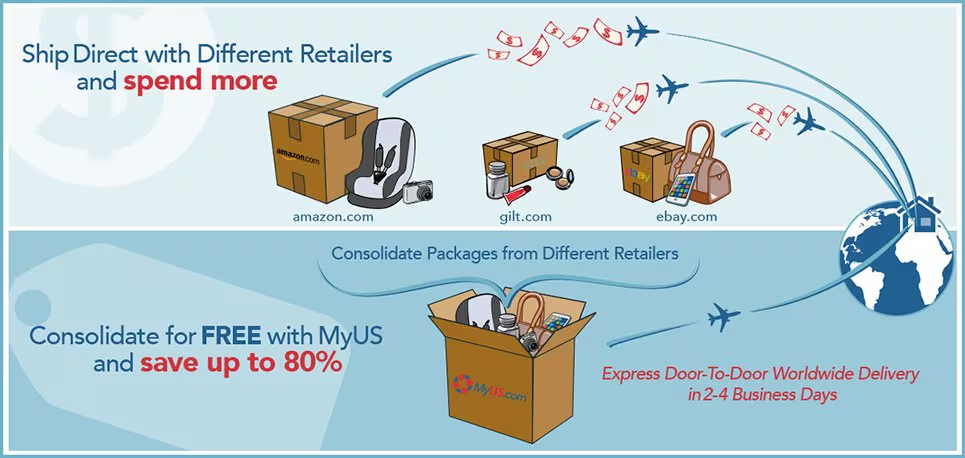
CNCartGo states that its designated warehouse offers 30 days of free storage and that consolidating multiple items for combined overseas shipping can save on international shipping costs. It also explains that in the warehouse section, only the items that have actually arrived are shown, which helps buyers understand what is ready and what is still pending.
For cross-platform buying, this is one of the biggest advantages.
Instead of shipping:
- one Taobao parcel
- one JD parcel
- one Weidian parcel
- one Pinduoduo-related parcel through a custom sourcing flow
the buyer can often wait, combine, and ship together. That reduces repeated minimum shipping charges and makes the export leg easier to manage.
Step 6: Shipping is billed after the real weight is known
For purchases placed through the Buy flow, CNCartGo says the initial payment covers only the product price, while shipping fees are not charged upfront. Once the product reaches the warehouse, CNCartGo calculates shipping cost based on weight and destination, then emails the buyer the shipping cost, typically within 3–5 days.
That matters because cross-platform orders are harder to estimate in advance. One seller may ship in bulky packaging. Another may send something very light but fragile. Accurate freight pricing only becomes possible after the warehouse receives and weighs the goods.
Step 7: The buyer chooses a logistics route
CNCartGo's Shipping Policy says it ships to most countries and regions worldwide, though some areas may be unavailable because of carrier or customs restrictions. It lists example options such as standard shipping (EMS / ePacket / Postal Service), express shipping (DHL / FedEx / UPS), and economy shipping (local postal services), each with estimated delivery windows.
This is useful for different buying goals:
- cheaper route for low-value daily-use items
- faster route for urgent personal goods
- more controlled route for business replenishment
- filtered route choices for items with shipping restrictions
What about products that are not easy to find directly on the platform?
That is where Sourcing becomes important
Your use case here is strong. Many overseas buyers do not buy only what is neatly indexed in a standard storefront. They may want a Pinduoduo product, a Weidian link from social media, or a JD item with complicated options.
CNCartGo's End-to-End Sourcing Service allows the buyer to provide:
- the product link
- product name
- specifications
- category
- notes
- product price
- quantity
- shipping cost
- optional images
The guide also says uploading images can help speed up order processing.
So when the product is not easy to search directly, the workflow becomes much simpler:
- copy the product link
- paste it into the Sourcing area
- add details like color, size, quantity, or remarks
- upload screenshots if helpful
- proceed through the same proxy-purchase flow
If you want to add your manual customer-service path, this is the best place to insert it:
[Insert your WhatsApp ordering instructions here]
CNCartGo's homepage publicly lists a WhatsApp contact, so a manual-assistance route clearly exists in its contact structure.
What real situations does this workflow fit best?
Scenario 1: An overseas student wants to buy familiar products from several China platforms
Imagine a student in the UK or Canada who wants dorm items, snacks, cosmetics, and low-cost accessories from different Chinese platforms. One product may be easier to find on Taobao, another cheaper on Pinduoduo, and another only available through a Weidian seller.
That buyer does not want four payment systems, four freight bills, and four separate shipping problems. A platform like CNCartGo turns that into one workflow: submit links, pay once for procurement stages, review inspection results, combine parcels, then choose one international route.
Scenario 2: A family wants to send items from China to a child studying overseas
CNCartGo's Buyer's Guide also includes a Delivery Order workflow. It says the user can provide the shipping carrier, tracking number, product name or link, category, quantity, price, and product attributes, then wait for warehouse inspection and receipt before selecting shipping and paying the invoice.
That is useful when the goods are already in China. Family or friends can send them to the warehouse first, and the overseas leg is arranged afterward.
Scenario 3: A U.S. offline store has already sourced products in China but still needs shipping support
A small retailer may already have products purchased in China through a supplier or local contact. The remaining problem is logistics:
- receiving the goods
- checking them
- organizing packages
- selecting routes
- getting an accurate freight bill
- exporting efficiently
That is exactly the kind of use case where a warehouse-and-shipping workflow matters even more than product search.
What should buyers check before placing a cross-platform order?
Return eligibility still matters
CNCartGo's Return Refund Policy says it offers a 5-day return/exchange service for eligible orders, with conditions such as seller support, resalable condition, short stock time, and buyer responsibility for return shipping in many cases. It also lists common non-eligible categories such as customized products, second-hand goods, and certain personal-use items.
So buyers should confirm return assumptions early, especially before items are exported.
Shipping restrictions still apply
The warehouse and shipping guidance notes that some items are subject to shipping restrictions and may not be available via all logistics routes, and the Shipping Policy says some regions may be temporarily unavailable due to carrier or customs restrictions.
This means the buyer should ask three basic questions before paying the final freight bill:
- Can this item ship to my country?
- Which route is available?
- Is the route appropriate for the product type?
Conclusion
Taobao, Pinduoduo, JD, and Weidian: How to Buy Across Platforms More Easily is not really a question about one marketplace. It is a question about how to reduce friction across several marketplaces at once.
For overseas buyers, the easier method is often not direct checkout on every individual platform. It is using one workflow that can handle payment, RMB-side purchasing, warehouse inspection, storage, parcel consolidation, accurate freight calculation, and international shipping.
That is why CNCartGo's model works well for cross-platform demand. Buyers can submit product links, pay in supported methods, let CNCartGo handle procurement in China, review inspected goods, combine shipments, and then choose the final delivery route after real package data is confirmed. For overseas students, family-shipping use cases, and small businesses buying from China, that is a much more manageable way to shop across platforms.